Concrete Steps & Stairs
Safe, attractive concrete steps and stairs custom built for your home or business in Billerica, MA.
Why Quality Steps Matter
Concrete steps serve as the entry point to your home or building. They get used multiple times every single day in all weather conditions. Quality matters for both safety and appearance. Poorly built steps develop cracks, settle unevenly, or become dangerous trip hazards. Well-constructed concrete steps provide safe, stable access for decades while enhancing your property curb appeal.
At BCL Billerica Concrete, we specialize in building concrete steps that combine structural integrity with attractive design. Whether you need simple utilitarian stairs for a side entrance or an elegant front entry with wide treads and decorative elements, we have the expertise to build it properly. Our steps meet all building codes, provide proper dimensions for safe use, and last through decades of New England weather.
Building concrete steps requires more skill than many people realize. Proper layout ensures comfortable rise and run dimensions that feel natural to walk on. The foundation must extend below frost depth to prevent heaving. Forms need precise construction to create level, uniform steps. Reinforcement placement provides strength and prevents cracking. Surface finishing creates non-slip texture for safety. Getting all these details right separates professional work from amateur attempts.
We build steps for various applications including front and back entrances, basement access, deck connections, walkout patios, and commercial buildings. Each project gets individual attention to design steps that work with your specific site conditions and aesthetic preferences. You get custom concrete stairs built to last and backed by our commitment to quality workmanship.
Designing Steps That Work
Concrete steps must meet building code requirements for safety and accessibility. These codes exist to prevent injuries and ensure stairs work well for people of all abilities. We design every stairway to comply with current codes while creating comfortable, attractive results.
Step Dimensions and Proportions
Building codes specify acceptable ranges for step rise (vertical height) and run (horizontal depth). Rise typically falls between 4 and 8 inches, with 7 to 7.5 inches being most comfortable for average adults. Run usually measures 10 to 11 inches minimum for safe footing. All steps in a flight must be uniform. Even small variations can cause tripping because your brain expects consistent dimensions. We calculate exact measurements before construction to ensure uniformity.
Width and Handrails
Minimum step width is typically 36 inches for residential stairs, though wider steps look better and feel more welcoming. Stairs with four or more risers generally require handrails. Commercial stairs have stricter requirements including specific handrail heights, extensions beyond the top and bottom steps, and sometimes center rails for wide stairs. We coordinate handrail installation with local contractors or can recommend qualified professionals.
Landings and Platforms
Steps rising more than a certain height need intermediate landings for safety and code compliance. Landings provide rest spots and prevent excessively long stair runs. Door landings must be large enough that doors can open fully without interfering with steps. We plan landing sizes and locations to meet code while creating functional, comfortable stair systems.
Safety Features
Surface texture prevents slipping, especially important in wet or icy conditions. We typically use broom finishes that provide good traction without being too rough. Nosing (the front edge of each tread) should be rounded slightly for safety and durability. Adequate lighting helps prevent falls, though electrical work is handled by licensed electricians. Step edges can be highlighted with contrasting colors or materials to improve visibility.
Beyond meeting minimum codes, we think about how your steps will actually be used. Front entry stairs benefit from generous width and gradual rise for a welcoming feel. Basement stairs can be steeper within code limits to save space. Steps connecting to patios or pool decks often work best with wider treads for a more relaxed feel. We discuss your needs and preferences to design stairs that look and function exactly right for your situation.
Building Steps to Last
Professional step construction follows specific procedures that ensure long-term performance. Each step in our process builds on the previous one to create stairs that remain safe and attractive for decades.
- Site evaluation and design: We measure the total rise and determine the number of steps needed. The design is calculated to provide uniform dimensions that feel comfortable and meet code requirements.
- Excavation and foundation: The area is excavated and a proper foundation is installed below frost depth. This prevents seasonal heaving that could crack or shift the stairs.
- Base preparation: Compacted gravel provides drainage and a stable base. Proper base work prevents settling that would make steps uneven.
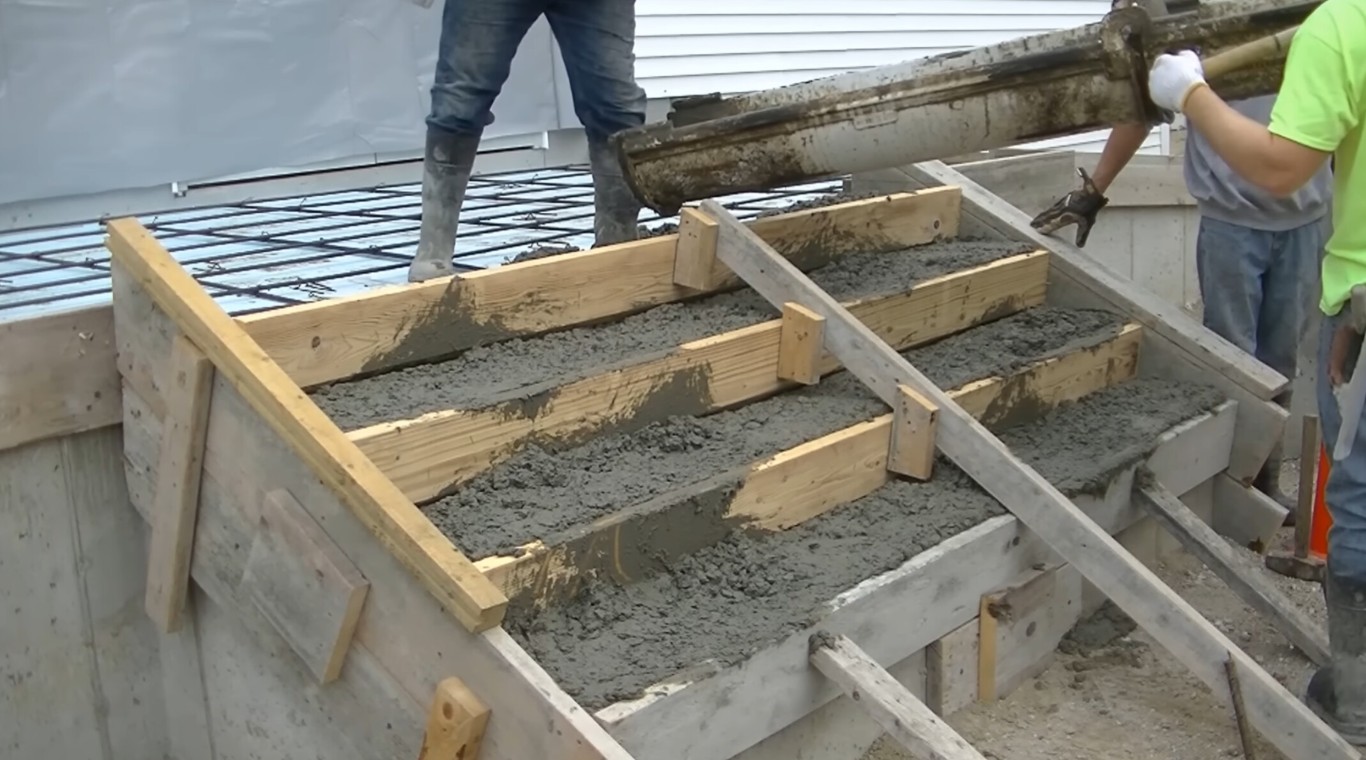
- Forming: Forms are built to exact dimensions using strong, straight lumber. Each tread and riser must be precisely positioned. We double-check all measurements before pouring.
- Reinforcement: Rebar or wire mesh adds strength and prevents cracking. Reinforcement is especially important for cantilevered or unsupported steps.
- Concrete placement: Quality concrete is placed carefully, working from bottom to top. Each step is consolidated properly to eliminate voids.
- Finishing: Surfaces are finished to provide traction while remaining easy to walk on. Edges are tooled neatly for clean, professional appearance.
- Curing: Proper curing prevents surface problems and ensures full strength development. We protect fresh concrete from temperature extremes and rapid drying.
Most step projects take two to four days depending on size and complexity. Larger staircases with multiple flights or landings take longer. Weather can affect schedules since concrete requires specific temperature conditions for proper curing. We provide realistic timelines upfront and keep you informed throughout the project.
Decorative options let you customize appearance beyond basic gray concrete. Colored concrete can match or complement your home. Exposed aggregate provides attractive texture and excellent traction. Borders, bands, or inset stone create visual interest. Steps can integrate with other concrete work like walkways or patios for a cohesive look. We discuss options during design to create steps that enhance your property aesthetics while providing decades of reliable service.
Whether replacing old deteriorated steps or building new construction, professional concrete stairs provide the perfect combination of safety, durability, and curb appeal. Our experience ensures your steps meet all codes, function properly, and look great. We stand behind our work because we build it right from the start.
Frequently Asked Questions
Need New Concrete Steps?
Contact us today for a free estimate on quality concrete stairs.